This post is another in my sporadic electronic sticky note series. I’ll post links to webpages with recipes I want to try making some day. I typically make Butternut Squash Enchilada Casserole when in the mood for veggie enchiladas. It’s the only vegetarian enchilada recipe I make.
UCR plant pathologist Gabriel Ortiz wanted to understand whether black eyed peas — a hugely popular food in many parts of the world — maintain their ability to attract good bacteria even after being subjected to modern farming practices. In many cases, plants heavily impacted by humans do not benefit as much from relationships with bacteria compared to their wild relatives. However, Ortiz and his team found that the peas maintained their natural ability to form beneficial relationships with nitrogen-fixing bacteria.
University of California – Riverside. “Black eyed peas could help eliminate need for fertilizer: Popular legume attracts beneficial nitrogen-fixing bacteria.” ScienceDaily. http://www.sciencedaily.com/releases/2022/01/220120091144.htm (accessed January 20, 2022).
I make black eyed peas once a year for good luck and good leftovers. This year will be different. One of my goals for the year is to make black eyed peas more than once a year.
“What’s all the chopping I hear?”
“I’m making a vegetarian version of my world famous Badass Black Eyed Peas.”
“Hmm…”
This recipe makes four servings as I suspect I’ll be the only one eating it.
1 T extra virgin olive oil 1 medium sweet onion, diced 3 carrots, scraped and diced 1 large green pepper, diced 2 cloves garlic, minced 1 bay leaf 1 T Mexican oregano 1 tsp apiece cumin, paprika 1-2 cups vegetable broth 1 15 ounce can stewed tomatoes 1 cup black eyed peas (dried) Salt & pepper to taste
Place the dried beans into a bowl large enough to hold the beans when fully plumped up. Rinse the beans with water several times. Fill the bowl with fresh water and soak overnight.
In the morning drain then rinse the beans. Drain again.
In a medium size pot heat the olive oil over medium heat.
Saute the onion, and green pepper until softened about five minutes. Add the garlic and saute another minute.
Add your spices, carrots and saute another minute until aromatic.
Pour the can of stewed tomatoes into the pot. Break up the tomatoes with your stirring spoon.
Add the beans and enough broth to barely cover the beans.
Bring to a boil then reduce the heat to low. Partially cover the pot with a lid and let ‘er go for a couple of hours.
Check the pot and stir occasionally to prevent sticking. Add more broth as the peas cook and the dish thickens.
Salt, pepper, and favorite hot sauce. Season to taste.
End Notes
Note the process starts the evening before if you’re using dried beans. You can always substitute two cans of black eyed peas, drained and rinsed. If you use canned beans, decrease the cooking time on the stove top to around 30 minutes.
I reduced the quantity of dried beans because I think I’ll be the only one eating these beans. There was sufficient salt in both the canned tomatoes and broth so I felt no need to add any more.
Someone wanted to make a German Chocolate Cake for her birthday. Third store, strike three. Not a single baking bar for this cake to be found. To avoid having the trip become an absolute failure I stocked up on some dried beans. Picked up more beans for my Badass Black Eyed Peas – 2021 and more chickpeas because I like chickpeas. Two pounds of dried beans cost less than three bucks. I love beans not just for their taste, variety and health benefits but also as an excellent way to stretch the food budget.
More Beans Less Beef
We don’t eat meat everyday. Whether you’re looking to improve your health, save money, save the planet, or save a few cows less meat is better. Not that dedicated non-meat eaters need another reason for their lifestyles here you go:
Source: Economists to Cattle Ranchers: Stop Being So Emotional About the Monopolies Devouring Your Family Businesses
Four packing companies control 80% of the cattle industry. Another fine example of profits before people (and animals).
Originally from New York, Dr. Belardo relocated to Philadelphia after college to start her medical career. She earned her medical degree (MD) from Drexel University College of Medicine, then completed her 3 year Internal Medicine Residency at Temple University Hospital where she became board certified in Internal Medicine in 2017. Dr. Belardo completed her 3 year Fellowship in Cardiovascular Disease at Lankenau Heart Institute in 2020. She is dedicated to being a cardiologist that in addition to traditional medicine, focuses on lifestyle modification, and evidence based nutrition, in order to prevent heart disease. Dr. Belardo is a Preventive Cardiologist in Newport Beach California.
If you come here often you’ll notice I am not about reinventing the wheel. When I find useful information I pass it along with full credit to their authors. The tips listed by Dr. Belardo are not new news but may be very useful for your individual health improvement goals.
At Xmas I was at my favorite DIL’s house in Owasso OK (don’t tell Chelsea). While making a cup of coffee I noticed the packaging on a loaf of private label bread that boldly pronounced
A Plant Based Food
A study by the Innovation Center for U.S. Dairy revealed 7% of Americans surveyed believe chocolate milk comes from brown cows.
I guess we have to tell people bread comes from plants.
The U.S. adult obesity rate stands at 42.4 percent, the first time the national rate has passed the 40 percent mark, and further evidence of the country’s obesity crisis. The national adult obesity rate has increased by 26 percent since 2008.
I needed a catchy title to draw your attention to this interesting short article by Dan Buettner. Buettner is a National Geographic Fellow and New York Times bestselling author. I actually do most of the nine habits already.
And I really did have beans for breakfast this morning.
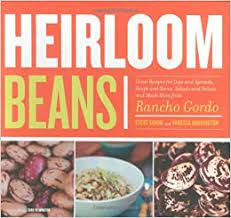
I really do own this cookbook too.
I really need to write down some of the dishes I’ve been making lately.
Experiments in mice found that CMC, and some other emulsifiers, altered gut bacteria resulting in more severe disease in a range of chronic inflammatory conditions, including colitis, metabolic syndrome and colon cancer. However, the extent to which such results are applicable to humans had not been previously investigated. The team performed a randomized controlled-feeding study in healthy volunteers. Participants, housed at the study site, consumed an additive-free diet or an identical diet supplemented with carboxymethylcellulose (CMC). Because the diseases CMC promotes in mice take years to arise in humans, the researchers focused here on intestinal bacteria and metabolites. They found that CMC consumption changed the make-up of bacteria populating the colon, reducing select species. Furthermore, fecal samples from CMC-treated participants displayed a stark depletion of beneficial metabolites that are thought to normally maintain a healthy colon.
The participants were followed for an average of 4.7 years and the study found that there was a reduced risk of CVD events for individuals consuming alcohol of 51-100, 101-150, and >150 g/week, compared to never consuming alcohol, regardless of gender. Consumption of 51-100 g/week was also associated with a reduced risk of all-cause mortality. Lead author, Dr Neumann, says the findings need to be interpreted with caution, as study participants were all initially healthy without prior CVD or other severe diseases, and may have been more physically and socially active than the wider ageing population.
Monash University. “Study of 18000+ US and Australian older people reveals moderate drinking protective against heart disease, more than for tea totalers: Moderate drinking of alcohol associated with reduced risk of heart disease and death from all causes, landmark study of older people reveals.” ScienceDaily. http://www.sciencedaily.com/releases/2021/11/211105103740.htm (accessed November 9, 2021).
I bet I’m not the only one calculating ounces to grams after reading the article.