Eat Eggs

Eggs are a rich source of dietary cholesterol, but they also contain a variety of essential nutrients. There is conflicting evidence as to whether egg consumption is beneficial or harmful to heart health. A 2018 study published in the journal Heart, which included approximately half a million adults in China, found that those who ate eggs daily (about one egg per day) had a substantially lower risk of heart disease and stroke than those who ate eggs less frequently*. Now, to better understand this relationship, the authors of this work have carried out a population-based study exploring how egg consumption affects markers of cardiovascular health in the blood.

eLife. “How eating eggs can boost heart health.” ScienceDaily. http://www.sciencedaily.com/releases/2022/05/220524124839.htm (accessed May 25, 2022).

Results – Egg consumption was associated with 24 out of 225 markers, including positive associations for apolipoprotein A1, acetate, mean HDL diameter, and lipid profiles of very large and large HDL, and inverse associations for total cholesterol and cholesterol esters in small VLDL. Among these 24 markers, 14 were associated with CVD risk. In general, the associations of egg consumption with metabolic markers and of these markers with CVD risk showed opposite patterns.

Conclusions – In the Chinese population, egg consumption is associated with several metabolic markers, which may partially explain the protective effect of moderate egg consumption on CVD.

Pan et al. investigated associations of self-reported egg consumption with plasma metabolic markers and these plasma metabolic markers with the risk of cardiovascular diseases. In general, there was some impact on metabolic markers which could protect against CVD. The paper will interest scientists in the field of nutritional epidemiology.

Association of egg consumption, metabolic markers, and risk of cardiovascular diseases: A nested case-control study — https://elifesciences.org/articles/72909

To review the study shortcomings hop over to the full study and read the editorial decision letter.

Stanford Center on Longevity – Diet Research Update

There are a growing number of diet choices that promote healthier eating. Common among several of the most-well known diets (e.g., paleo, Mediterranean, vegan), is an emphasis on the consumption of plant-based foods (sometimes alongside animal protein, sometimes without), and the avoidance of added sugar, refined grains, and ultra-processed foods. There is increasing evidence that consuming more plant-based foods is beneficial to our overall health, especially our immune system health. There are also data indicating that consuming more plant protein than animal protein is healthy for both ourselves and the environment.

Diet — https://longevity.stanford.edu/research-update-on-diet/

Reality check below –

We have a lot of work to do.

Do your part by reading the entire research update and sharing the love.

WHAT? Another Website Devoted to Beans?

Yes there is. https://beaninstitute.com/

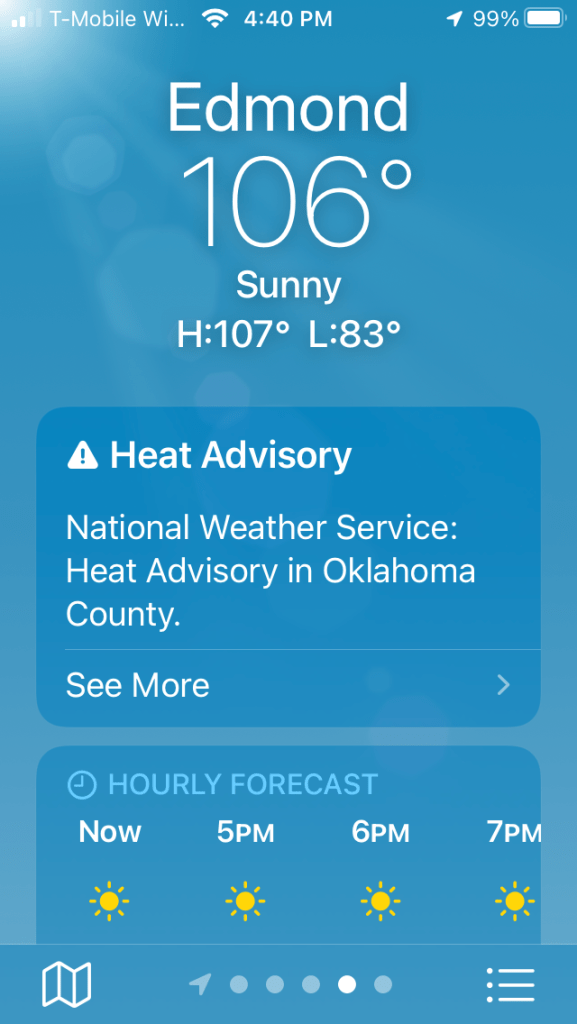
Here is another post in my world famous Beans for Breakfast AND Electronic Sticky Note series. Honestly, I’m just surfing the Internet looking for bean recipes to make when the temperature outside will be 106 degrees F and I don’t want HOT beans. Note for new visitors to this blog:

  • I do eat beans for breakfast on occasion and
  • An electronic sticky note is a Memo to Self with links to websites for recipes to try as I expand my bean recipe repertoire.

WOO HOO!

The other day I discovered 30 Recipes with a Can of Chickpeas at https://feelgoodfoodie.net/chickpeas-recipes/

I also found 15 Nutritious Vegan White Bean Recipes at https://www.thefullhelping.com/15-nutritious-vegan-white-bean-recipes/

Double WOO HOO!

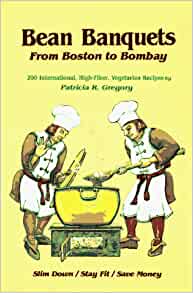
My bean obsession began many years ago during my vegetarian years. I still have this cookbook as proof.

Copyright date is 1984.

In blue zones areas, we found that the longest-lived people eat a full cup of beans every day.

The World’s #1 Longevity Food — https://www.bluezones.com/2016/06/10-things-about-beans/#

Always remember what you don’t eat is as important if not more important to health and longevity than what you eat.

Higher protein intake leads to healthier eating (maybe)

Eating a larger proportion of protein while dieting leads to better food choices and helps avoid the loss of lean body mass, according to a new study.

Rutgers University. “Higher protein intake while dieting leads to healthier eating.” ScienceDaily. http://www.sciencedaily.com/releases/2022/06/220627141426.htm (accessed June 28, 2022).

Small study (n=200) and diet was self-selected. The relationship between higher protein intake and overall diet quality may be a spurious finding.

Reasons For Weight Regain

The primary reason for weight regain is biology. The brain defends against weight loss because of an old biological play book. If our ancestors lost weight, it was not to look good for a wedding or because of bathing suit season. Back then, weight loss was either because of illness or an interrupted food supply. Simply put, defending against weight loss was defending against death.

Guest Post: Reasons For Weight Regain – https://www.drsharma.ca/guest-post-reasons-for-weight-regain

This blog post is filed under “Things I Wish I Knew 50 Years Ago”.

If you struggle with weight loss followed by weight gain this article could save you from years of riding the roller coaster.

I just got back from a trip to Colorado, Craft Beer Capital of the World.

Here’s what happened. Nothing!

KISS (keep it simple stupid)

The best advice is the simplest: ignore diets and supplements and, instead, just aim to cut out junk like processed and fried foods.

We’ve Reached Peak Wellness. Most of It Is Nonsense. – https://www.outsideonline.com/health/wellness/wellness-industry-lies-what-really-works/

Common sense advice. I recommend reading the entire article.

Key Points

  • Move your body, don’t eat crap
  • Don’t diet
  • Relationships matter (in person, not online social media crap)
  • Passion takes time to develop
  • Cultivate purpose
  • Find your environment

Is There a Website Devoted to Beans?

Yes there is. https://usdrybeans.com/

This is another post in my world famous Beans for Breakfast series.

I post links like this to remind readers no one can possibly teach you everything. There is a ton of information on the internet to research and read to improve your food and nutrition knowledge. But you have to take the time and be motivated to find solid, good information. Avoiding fad diets would be a good thing too.

And for the conspiracy theorists out there feel free to use this information to fight back against the World Economic Forum telling us to eat bugs. https://www.weforum.org/agenda/2018/07/good-grub-why-we-might-be-eating-insects-soon/

Eat beans instead of bugs.

Postscript –

I posted then got this:

WOO HOO!

Alcohol: Good or Bad for You? – Health Secrets of a SuperAger

It’s hard to know what to think about the recommendations for alcohol consumption when the narrative around it changes like the wind. Numerous studies have come out in support of moderate alcohol consumption because of its potential health benefits only to be countered by similar studies arguing that it’s actually more harmful than beneficial, according […]

Alcohol: Good or Bad for You? – Rush — Health Secrets of a SuperAger

I found a blogger who is older than me.

I finally have a research assistant.

Thanks Tony.

Time Restricted Eating Diets Don’t Work

The study, published online in JAMA Internal Medicine by Dylan A. Lowe, PhD, also of UCSF, involved 116 participants who were randomized to a 12-week regimen of either three structured meals per day or time-restricted eating, with instructions to eat only between 12:00 pm and 8:00 pm and to completely abstain from eating at other times.

Time-Restricted Eating Shows No Weight Loss Benefit in RCT – Medscape – Oct 01, 2020 — https://www.medscape.com/viewarticle/938433#vp_2

Despite the lack of evidence I intend to continue my time restricted eating strategy. I do not eat anything between the hours of 10:00 PM and 7:00 AM.

Protein for Older Adults

There is reliable research that suggests that older adults need slightly more protein than younger adults do. A somewhat higher protein intake, especially when combined with resistance training can build muscle in older adults. This increased muscle can help to offset the muscle loss that is a part of the aging process. Muscle loss can increase the risk of falls and keep older people from doing the tasks they’d like to do.

VRG Blog – https://www.vrg.org/blog/2022/02/03/protein-for-older-adults/

The latest data from a decades-long health survey finds that—yet again—the vast majority of Americans have a poor diet and many of us are inactive. Specifically, just 10 percent of Americans eat enough vegetables, and only 12 percent eat enough fruit, according to recent responses to the CDC’s survey, the Behavioral Risk Factor Surveillance system. Recent responses also reveal that 25 percent of Americans don’t do any exercise outside of any work activity.

90% of the US Has a Poor Diet — https://arstechnica.com/science/2022/01/even-before-covid-americans-were-failing-at-health-basics-diet-exercise/

Lee SH, Moore LV, Park S, Harris DM, Blanck HM. Adults Meeting Fruit and Vegetable Intake Recommendations — United States, 2019. MMWR Morb Mortal Wkly Rep 2022;71:1–9. DOI: http://dx.doi.org/10.15585/mmwr.mm7101a1

In this cross-sectional study of 10 837 adults aged 65 years or older in the National Health and Nutrition Examination Survey, the mean primary American Heart Association score had a significant 8% decrease. The proportion of older US adults with poor diet quality significantly increased from 51% to 61%, and the proportion with intermediate diet quality significantly decreased from 49% to 39%; the proportion of older US adults with ideal diet quality remained consistently low. These findings suggest that diet quality decreased among older US adults from 2001 to 2018.

Trends in Diet Quality Among Older US Adults From 2001 to 2018 — https://jamanetwork.com/journals/jamanetworkopen/fullarticle/2789924

To say most of us know very little about nutrition would be an understatement.