POP !!!
Worldwide, MASLD became the most common chronic liver disease, affecting up to 38% of the adult population (11). In addition, the global prevalence of MASLD is expected to further increase during the next two decades (12). For example, in the U.S., the prevalence of MASLD is predicted to increase from 34% (86 million people) in […]
Walking is the most preferred PA mode for older adults [4] and increasing daily step count may reduce the presence of frailty. Observational research finds a dose-response relationship with higher daily step counts associated with lower frailty prevalence [5]. This relationship persists even among those with very low step counts (less than 3,000 per day) […]
Prospective study of phosphatidylethanol (PEth) as a diagnostic biomarker for identifying alcohol use disorder (AUD) among participants at risk for steatotic liver disease – https://doi.org/10.1136/gutjnl-2026-339702 Cool.
Phone ban impact on student academic achievement The top estimate is the estimated average treatment effect of the phone ban on student academic achievement across the full population. The next estimates contain heterogeneous treatment effects for subgroups split by prior average academic achievement (above or below preexperiment median), years of study, and field of study. […]

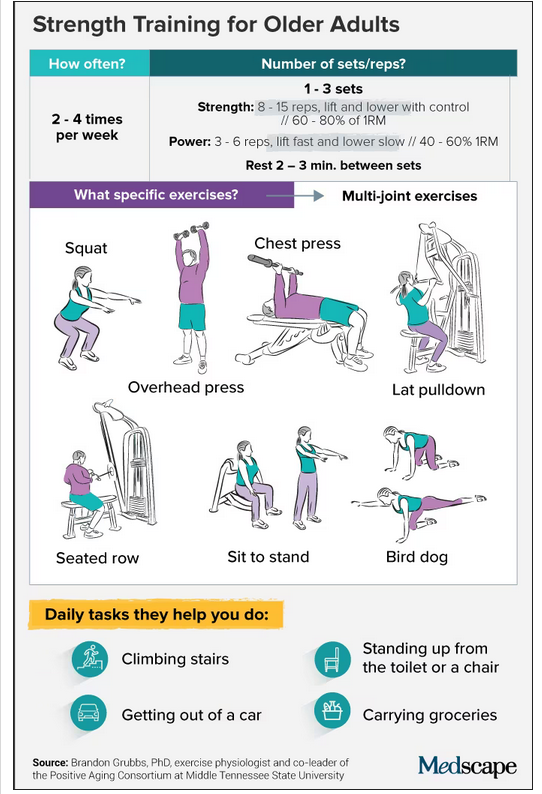


This is really really good information. Do you know the difference between strength and power exercises? And which one would be better for activities of daily living as one ages? Also, which would be better for maintaining bone density?
Strength = slow and steady, controlled movements. Power = fast then slow. Think of a power lifter. OOOMMPH. Then slow in reverse. Both are good for daily living and bone density. I thought the article was very good also.
OOOMPH. I like the technical terms.