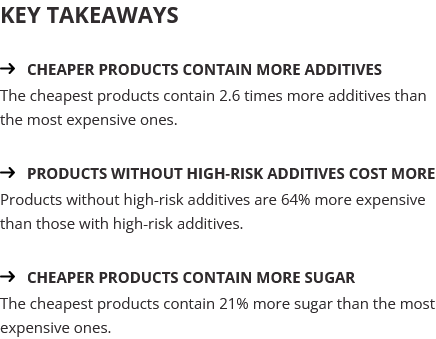
HT – Marion Nestle – https://www.foodpolitics.com/2026/03/weekend-reading-the-hidden-cost-of-cheap-food/
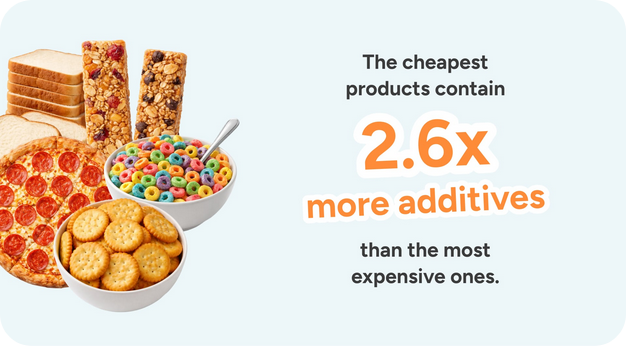
Download the full report – https://yuka.io/en/report-food-price-composition-us/
Yikes.

A food memoir of weight loss, family recipes, digital cookbook and nutrition information for family and friends
HT – Marion Nestle – https://www.foodpolitics.com/2026/03/weekend-reading-the-hidden-cost-of-cheap-food/
Download the full report – https://yuka.io/en/report-food-price-composition-us/
Yikes.
While wild oysters were an important part of an Indigenous diet in what is now Maine, by the 1900s they had all but disappeared. Most people considered them functionally extinct, in fact, until this spring, when researchers from the University of Maine published a study confirming their return, often in close proximity to the oyster farms that have populated the waterfront over the last few decades. Wild Oysters Make a Comeback in Maine – https://civileats.com/2025/10/14/wild-oysters-make-a-comeback-in-maine/
I don’t eat oysters.
I’ve had Paralytic Shellfish Poisoning https://hab.whoi.edu/impacts/impacts-human-health/human-health-paralytic-shellfish-poisoning/ and that was that.
Drinking coffee is linked to stimulating the growth of bacteria like L. asaccharolyticus—creating a healthier gut microbiome. As coffee compounds are metabolized by gut bacteria, they produce beneficial metabolites like quinic acid (which research shows has antioxidant and protective properties2) and hippurate (which is a marker of metabolic health). Drinking This Daily Can Increase 115 Types Of Good Gut Bacteria – https://www.mindbodygreen.com/articles/new-study-reveals-impact-of-coffee-on-gut-microbiome-what-does-this-mean-for-you
I think I’ll have another cup.
The study, published online in The Journal of Nutrition, found that consumption of 1-2 cups of caffeinated coffee per day was linked to a lower risk of death from all causes and death from cardiovascular disease. Black coffee and coffee with low levels of added sugar and saturated fat were associated with a 14% lower risk of all-cause mortality as compared to no coffee consumption. The same link was not observed for coffee with high amounts of added sugar and saturated fat. Black coffee, longer life: The science behind your morning perk
Tufts University. “Black coffee, longer life: The science behind your morning perk.” ScienceDaily. http://www.sciencedaily.com/releases/2025/06/250617014142.htm (accessed June 17, 2025).
Super-spreaders build trust by connecting with audiences emotionally, rather than by overwhelming them with data. They position themselves as relatable truth-tellers who challenge corrupt institutions and offer simple, “empowering” solutions. Through personal anecdotes and motivational, accessible language, they create an “us vs. them” narrative in which misinformation becomes a form of liberation. Many frame their dietary advice as part of a broader movement, towards healing, strength, clarity, masculinity/femininity or even revolution. “Natural” or “traditional” diets (e.g. those relying heavily on animal-based foods or that exclude modern-day “processed” foods) are frequently presented as easy solutions to complex health problems. This combination of emotional resonance and charismatic storytelling helps explain why such misinformation is so persuasive.
Of the 53 super-spreaders analyzed, 96% (51 accounts) had a clear financial incentive directly tied to the misinformation they promoted, with many capitalizing on multiple revenue streams.
Nutrition Misinformation in the Digital Age
Shocking!
Download the full report here: https://rootedresearch.co/publications/nutrition-misinformation-digital-age/
Researchers tested whether sauerkraut’s nutrients could help protect intestinal cells from inflammation-related damage. The study compared raw cabbage, sauerkraut and the liquid brine left behind from the fermentation process. The sauerkraut samples included both store-bought products and fermented cabbage made in the lab.
They found that sauerkraut helped maintain the integrity of intestinal cells, while raw cabbage and brine did not. Marco said that there was also no noticeable difference between grocery store sauerkraut and the lab-made version. University of California – Davis. “The gut health benefits of sauerkraut.”The gut health benefits of sauerkraut https://www.sciencedaily.com/releases/2025/04/250414162040.htm (accessed April 15, 2025).
I stopped eating sauerkraut a long time ago when I stopped eating hot dogs.
Tofu dogs anyone?
In this new study, published in Nature Microbiology, Professor Anders Rosengren and colleagues have instead looked at prediabetes. This condition is a precursor to type 2 diabetes, with slowly rising blood sugar levels due to impaired insulin production.
The study encompassed 89 people with elevated fasting blood sugar, an indicator of prediabetes. Other criteria included the participants being overweight or obese and 35-75 years old.
The participants were randomly assigned sulforaphane or a placebo for twelve weeks. Neither the participants nor the researchers knew who was assigned which. A total of 74 participants completed all stages of the study.
The results show that participants taking the sulforaphane compound had a higher average reduction in fasting blood sugar than those taking the placebo. The difference between the two groups in the study was considerable.
University of Gothenburg. “Reduced prediabetes in people who ate broccoli compound.” ScienceDaily. http://www.sciencedaily.com/releases/2025/02/250214003212.htm (accessed February 21, 2025).
Eat More Broccoli. Sauteed in extra virgin olive oil and garlic. Lots of garlic.
Understanding why we always have room for dessert could lead to new treatments for obesity, researchers have revealed.
— Read on www.newsweek.com/dessert-stomach-real-brain-neurons-mice-2030775
“These neurons are unlike any other neuron involved in regulating satiation,” says Alexander Nectow, a physician-scientist at Columbia University Vagelos College of Physicians and Surgeons, who led the research with Srikanta Chowdhury, an associate research scientist in the Nectow lab. “Other neurons in the brain are usually restricted to sensing food put into our mouth, or how food fills the gut, or the nutrition obtained from food. The neurons we found are special in that they seem to integrate all these different pieces of information and more.”
“Essentially these neurons can smell food, see food, feel food in the mouth and in the gut, and interpret all the gut hormones that are released in response to eating,” Nectow says. “And ultimately, they leverage all of this information to decide when enough is enough.”Columbia University Irving Medical Center. “Researchers discover the brain cells that tell you to stop eating.” ScienceDaily. http://www.sciencedaily.com/releases/2025/02/250205131107.htm (accessed February 8, 2025).
I need more of these brain cells.
Yikes
To examine the risk of dementia, researchers included a group of 133,771 people with an average age of 49 who did not have dementia at the start of the study. They were followed up to 43 years. Of this group, 11,173 people developed dementia. Participants completed a food diary every two to four years, listing what they ate and how often. Researchers defined processed red meat as bacon, hot dogs, sausages, salami, bologna and other processed meat products. They defined unprocessed red meat as beef, pork, lamb and hamburger. A serving of red meat is three ounces, about the size of a deck of cards. Researchers calculated how much red meat participants ate on average per day. For processed red meat, they divided participants into three groups. The low group ate an average of fewer than 0.10 servings per day; the medium group ate between 0.10 and 0.24 servings per day; and the high group, 0.25 or more servings per day. After adjusting for factors such as age, sex and other risk factors for cognitive decline, researchers found that participants in the high group had a 13% higher risk of developing dementia compared to those in the low group. Is Eating More Red Meat Bad for Your Brain? – https://www.aan.com/PressRoom/Home/PressRelease/1082
This large study is a collaboration funded by the National Institutes of Health to NYU Langone Health and includes authors from Johns Hopkins University and other U.S. institutions. The new study relies on information gathered from the ongoing Atherosclerosis Risk in Communities Neurocognitive Study (ARIC-NCS), which since 1987 has closely tracked the vascular health and cognitive function of nearly 16,000 participants as they age. ARIC-NCS is also, the researchers say, the longest-followed cohort of African Americans for researching cognition and heart health. Published in the journal Nature Medicine online January 13, the study concludes that from 1987 until 2020, there were 3,252 study participants who were documented as having developed dementia. This translates to an overall lifetime risk for dementia among middle-aged Americans of 42 percent, which is an average of the 35 percent risk in men and the 48 percent risk in women. The excess risk in women was largely due to their lower death rates. United States Dementia Cases Estimated to Double by 2060 – https://nyulangone.org/news/united-states-dementia-cases-estimated-double-2060
 garyskitchen.net