
“These neurons are unlike any other neuron involved in regulating satiation,” says Alexander Nectow, a physician-scientist at Columbia University Vagelos College of Physicians and Surgeons, who led the research with Srikanta Chowdhury, an associate research scientist in the Nectow lab. “Other neurons in the brain are usually restricted to sensing food put into our mouth, or how food fills the gut, or the nutrition obtained from food. The neurons we found are special in that they seem to integrate all these different pieces of information and more.”
“Essentially these neurons can smell food, see food, feel food in the mouth and in the gut, and interpret all the gut hormones that are released in response to eating,” Nectow says. “And ultimately, they leverage all of this information to decide when enough is enough.”Columbia University Irving Medical Center. “Researchers discover the brain cells that tell you to stop eating.” ScienceDaily. http://www.sciencedaily.com/releases/2025/02/250205131107.htm (accessed February 8, 2025).
I need more of these brain cells.
Eat More Beans, Peas and Lentils
The scientific report has some positive recommendations. It recommends that Americans eat more beans, peas, and lentils and eat less red and processed meat. It recommends that Beans, Peas, and Lentils move from a subgroup of the Vegetables Food Group to a subgroup of the Protein Food Group. When listing foods in the Protein Food Group, Beans/Peas/Lentils should be listed first, followed by Nuts/Seeds/Soy products, then Seafood, and lastly Meats/Poultry/Eggs. – 2025 Dietary Guidelines Advisory Committee’s Scientific Report Recommends Eating More Beans, Peas, and Lentils and Eating Less Red and Processed Meat – http://www.vrg.org/blog/2025/01/31/2025-dietary-guidelines-advisory-committees-scientific-report-recommends-eating-more-beans-peas-and-lentils-and-eating-less-red-and-processed-meat/
If you want to geek out on the full report here’s the download link – https://www.dietaryguidelines.gov/2025-advisory-committee-report
U.S. rates of nutrition-related chronic health conditions are high, and data show significant differences in prevalence across socio-demographic groups. For example, the prevalence of obesity is lower among non-Hispanic Asian children compared to all other race and/or ethnicity groups examined, and the prevalence is lower in non-Hispanic White children compared to non-Hispanic Black and Hispanic and/or Latino children. Obesity is significantly lower among children with higher family income compared to those with lower family income. Among adults, the prevalence of obesity is lower among non-Hispanic Asian adults and higher in non-Hispanic Black adults. Prevalence of hypertension is higher in non-Hispanic Black adults than adults of all other race and/or ethnicity groups examined. Diabetes is lower in non-Hispanic White adults compared to all other race and/or ethnicity groups examined, while gestational diabetes is highest among non-Hispanic Asian adults and lowest among non-Hispanic Black adults. Income data show that among adults, the prevalence of obesity, of hypertension, and of diabetes are higher among families with lower incomes compared to higher incomes.
I’ve not read the entire report but judging from what I’ve read so far it is definitely Geek Paradise.
Eat Less Processed Red Meat
Yikes
To examine the risk of dementia, researchers included a group of 133,771 people with an average age of 49 who did not have dementia at the start of the study. They were followed up to 43 years. Of this group, 11,173 people developed dementia. Participants completed a food diary every two to four years, listing what they ate and how often. Researchers defined processed red meat as bacon, hot dogs, sausages, salami, bologna and other processed meat products. They defined unprocessed red meat as beef, pork, lamb and hamburger. A serving of red meat is three ounces, about the size of a deck of cards. Researchers calculated how much red meat participants ate on average per day. For processed red meat, they divided participants into three groups. The low group ate an average of fewer than 0.10 servings per day; the medium group ate between 0.10 and 0.24 servings per day; and the high group, 0.25 or more servings per day. After adjusting for factors such as age, sex and other risk factors for cognitive decline, researchers found that participants in the high group had a 13% higher risk of developing dementia compared to those in the low group. Is Eating More Red Meat Bad for Your Brain? – https://www.aan.com/PressRoom/Home/PressRelease/1082
This large study is a collaboration funded by the National Institutes of Health to NYU Langone Health and includes authors from Johns Hopkins University and other U.S. institutions. The new study relies on information gathered from the ongoing Atherosclerosis Risk in Communities Neurocognitive Study (ARIC-NCS), which since 1987 has closely tracked the vascular health and cognitive function of nearly 16,000 participants as they age. ARIC-NCS is also, the researchers say, the longest-followed cohort of African Americans for researching cognition and heart health. Published in the journal Nature Medicine online January 13, the study concludes that from 1987 until 2020, there were 3,252 study participants who were documented as having developed dementia. This translates to an overall lifetime risk for dementia among middle-aged Americans of 42 percent, which is an average of the 35 percent risk in men and the 48 percent risk in women. The excess risk in women was largely due to their lower death rates. United States Dementia Cases Estimated to Double by 2060 – https://nyulangone.org/news/united-states-dementia-cases-estimated-double-2060
The Last Bag of Organic Frozen Peas I Bought Will Be The Last Bag of Organic Frozen Peas I’ll Ever Buy
The false dichotomy between conventional and organic isn’t just misleading, it’s dangerous. Our constant attention on natural versus synthetic only causes fear and distrust, when in actuality, our food has never been safer.
Eating fewer fruits and vegetables due to fear of pesticides or the high price of organic food does far more harm to our health. Conventional produce has the same nutritional content and is as safe to consume as ‘organic’ produce. Most of Americans already don’t eat enough fruits and vegetables, and produce contains important nutrients, fiber, and other substances that are extremely important to our health.
From a scientific point of view, organic foods are not superior. If you want to spend more money on them, go for it. But don’t buy organic because you think it’s better for you or for the planet, because it’s not. Organic foods are not healthier…or pesticide free. — https://news.immunologic.org/p/organic-foods-are-not-healthieror
I’m beginning to think I read too much. But every now and then I come across very interesting and useful information. The entire article is about a 10-15 read and is worth your time.
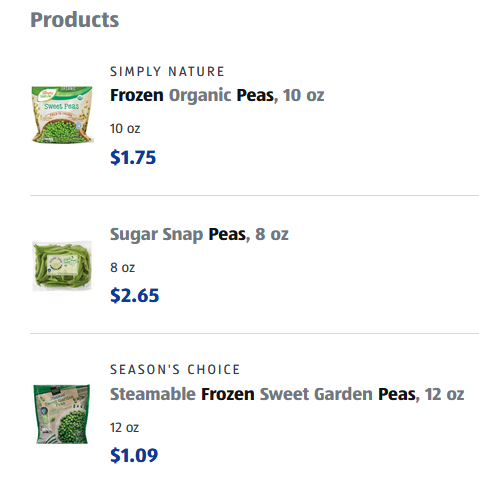
The amount of product labeled Organic in my freezer and pantry are minimal compared to everything else. But if the quality isn’t better or the nutritional value isn’t superior then my choice is to save money at the store whenever I can.
Nutritional quality of organic foods: a systematic review – https://ajcn.nutrition.org/article/S0002-9165(23)26563-6/fulltext
Persistent Metabolic Adaptation
Sunday 10/6
Straight to the point. My BMI is back in the overweight range. I was hoping for a random uptick with a gradual return to my 173-175 range but it has not happened. I now fluctuate between 177 and 178. Another pound or two and my skinny jeans won’t fit anymore. So the research geek in me took over. I wanted to know why I’m gaining weight after years of keeping my number down. Lack of enough exercise was an obvious reason. But I also felt my metabolism changed (again) so down the rabbit hole I went. The deeper I went the dots starting connecting.
I recall reading somewhere that successful weight loss maintainers changed their diets multiple times in their lifetimes. I found this to be true in my case. Remember The Biggest Loser television show? I found this fascinating study Persistent metabolic adaptation 6 years after “The Biggest Loser” competition – https://doi.org/10.1002/oby.21538. Fascinating because the participants with greater long-term weight loss also had greater ongoing metabolic slowing. It appears my metabolism is slowing down not just from age but also from the fact I’ve maintained my weight loss for a long time.
And if this wasn’t bad enough I stumbled upon Metabolic adaptation is associated with a greater increase in appetite following weight loss: a longitudinal study – https://doi.org/10.1016/j.ajcnut.2023.10.010. Lose weight. Appetite increases!
The universe opened up her secrets to me. I need to change my diet (again).
Take Home Lesson
Long-term weight loss requires perpetual behavioral adaptation to offset persistent metabolic adaptation.
In plain English, I have to eat less or I’m screwed. Because I already know I’m in the one third category.
About 10 percent of older people living in their own homes do not eat enough and one-third of people over the age of 65 eat too much. More than half of older people in hospitals or nursing homes have malnutrition (poor nutrition or diet). – https://www.healthinaging.org/a-z-topic/nutrition/basic-facts
More on Blue Zones and a Diet You Probably Never Heard Of
Food is another key component of healthy living in blue zones, says Buettner. People there tend to consume unprocessed foods, beans, legumes, fruits, and vegetables—often following traditional recipes that have been passed down through generations. That style of eating is good for heart and cognitive health, says Linda Hershey, MD, PhD, FAAN, professor of neurology at the University of Oklahoma Health Sciences Center in Oklahoma City. “Numerous high-quality studies support the benefits of the MIND, DASH, and Mediterranean diets, which emphasize green leafy vegetables, fruits, beans, nuts, fish, poultry, oil, and whole grains, and discourage fried food, processed meat, snack foods, and sweets,” Dr. Hershey says.
“Blue Zones” Author Dan Buettner Shares the Secrets to a Long and Healthy Life — https://www.brainandlife.org/articles/author-dan-buettner-shares-secrets-to-long-healthy-life
Just Another Diet You Probably Never Heard Of
Researchers used the portfolio diet score to rank the participants’ consumption of plant proteins, nuts and seeds, viscous fiber, phytosterols and plant sources of monounsaturated fatty acids. After up to 30 years of follow-up, those with the highest portfolio diet score had a 14% lower risk of coronary heart disease and stroke compared to those with the lowest score. The findings were published Wednesday in the American Heart Association journal Circulation.
“We’re always looking at ways to reduce the risk of heart disease, and one effective way to do that is to lower blood cholesterol levels, particularly LDL cholesterol,” said Dr. Kristina Petersen, an associate professor of nutritional sciences at Penn State in University Park, Pennsylvania.
Petersen, who was not involved in the research, is well-versed in how diets can affect heart health. She co-authored an AHA scientific statement published in April that scored 10 popular diets for their heart-health benefits. The Dietary Approaches to Stop Hypertension – or DASH – diet was the only eating pattern to get a perfect score, with the Mediterranean and pescetarian diets rounding out the top three. The portfolio diet was excluded from the assessment “because it’s not particularly common,” she said.
Ever heard of the portfolio diet? — https://www.heart.org/en/news/2023/10/25/ever-heard-of-the-portfolio-diet-it-may-lower-risk-for-heart-disease-and-stroke
 garyskitchen.net