
The Last Bag of Organic Frozen Peas I Bought Will Be The Last Bag of Organic Frozen Peas I’ll Ever Buy

The false dichotomy between conventional and organic isn’t just misleading, it’s dangerous. Our constant attention on natural versus synthetic only causes fear and distrust, when in actuality, our food has never been safer.

Eating fewer fruits and vegetables due to fear of pesticides or the high price of organic food does far more harm to our health. Conventional produce has the same nutritional content and is as safe to consume as ‘organic’ produce. Most of Americans already don’t eat enough fruits and vegetables, and produce contains important nutrients, fiber, and other substances that are extremely important to our health.

From a scientific point of view, organic foods are not superior. If you want to spend more money on them, go for it. But don’t buy organic because you think it’s better for you or for the planet, because it’s not. Organic foods are not healthier…or pesticide free.https://news.immunologic.org/p/organic-foods-are-not-healthieror

I’m beginning to think I read too much. But every now and then I come across very interesting and useful information. The entire article is about a 10-15 read and is worth your time.
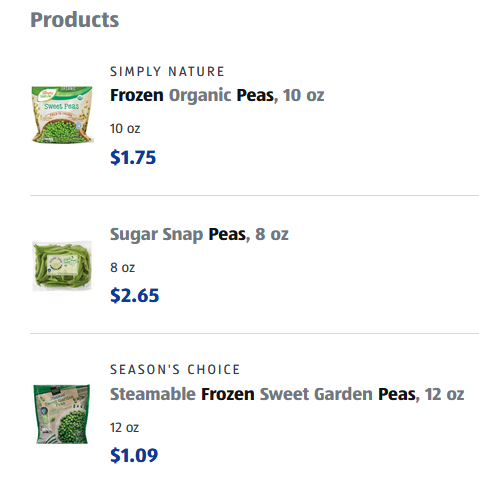
The amount of product labeled Organic in my freezer and pantry are minimal compared to everything else. But if the quality isn’t better or the nutritional value isn’t superior then my choice is to save money at the store whenever I can.

Nutritional quality of organic foods: a systematic reviewhttps://ajcn.nutrition.org/article/S0002-9165(23)26563-6/fulltext

More on Blue Zones and a Diet You Probably Never Heard Of

Food is another key component of healthy living in blue zones, says Buettner. People there tend to consume unprocessed foods, beans, legumes, fruits, and vegetables—often following traditional recipes that have been passed down through generations. That style of eating is good for heart and cognitive health, says Linda Hershey, MD, PhD, FAAN, professor of neurology at the University of Oklahoma Health Sciences Center in Oklahoma City. “Numerous high-quality studies support the benefits of the MIND, DASH, and Mediterranean diets, which emphasize green leafy vegetables, fruits, beans, nuts, fish, poultry, oil, and whole grains, and discourage fried food, processed meat, snack foods, and sweets,” Dr. Hershey says.

“Blue Zones” Author Dan Buettner Shares the Secrets to a Long and Healthy Life — https://www.brainandlife.org/articles/author-dan-buettner-shares-secrets-to-long-healthy-life

Just Another Diet You Probably Never Heard Of

Researchers used the portfolio diet score to rank the participants’ consumption of plant proteins, nuts and seeds, viscous fiber, phytosterols and plant sources of monounsaturated fatty acids. After up to 30 years of follow-up, those with the highest portfolio diet score had a 14% lower risk of coronary heart disease and stroke compared to those with the lowest score. The findings were published Wednesday in the American Heart Association journal Circulation.

“We’re always looking at ways to reduce the risk of heart disease, and one effective way to do that is to lower blood cholesterol levels, particularly LDL cholesterol,” said Dr. Kristina Petersen, an associate professor of nutritional sciences at Penn State in University Park, Pennsylvania.

Petersen, who was not involved in the research, is well-versed in how diets can affect heart health. She co-authored an AHA scientific statement published in April that scored 10 popular diets for their heart-health benefits. The Dietary Approaches to Stop Hypertension – or DASH – diet was the only eating pattern to get a perfect score, with the Mediterranean and pescetarian diets rounding out the top three. The portfolio diet was excluded from the assessment “because it’s not particularly common,” she said.

Ever heard of the portfolio diet? — https://www.heart.org/en/news/2023/10/25/ever-heard-of-the-portfolio-diet-it-may-lower-risk-for-heart-disease-and-stroke